
The Annual Report
. . . and the Winter Conference finally arrive at 320kph


Hello to everyone from the TGV somewhere West of Dijon, where the rivers have jumped their banks and flooded the muddy green fields near the tracks. This place reminds me so much of where I grew up, just fields and windbreaks, although my 1981 Mazda 626 didn’t quite achieve this speed even with Alice in Chains blasting out the windows.1 Speaking of flooding, earlier this week, someone scraped the Org Science website and spammed everyone with a message ostensibly from me, or at least from someone with a gmail account that started with “presidentola”. I suppose that’s better than “presidentino”, but definitely not me. Oh, and if I ever address you with “are you doing wonderfully well?” please file a formal complaint. So thanks to some of you for giving me the heads up, and sorry for the annoyance.
I’ve been trying to catch up on decision letters on the train, but shifted to getting this report out after the third letter ground to a stop. Writing letters is hard and I’ve ended up with too many papers again. I’ll see what I can finish before the Winter Conference begins, but in doing this I am again amazed at what great reviewers we have. I don’t always agree with final assessments, but find that the vast majority of comments are thoughtful and on point.
Let me get to the annual report now. I hope you’ll find it informative.
2025 Organization Science Annual Report
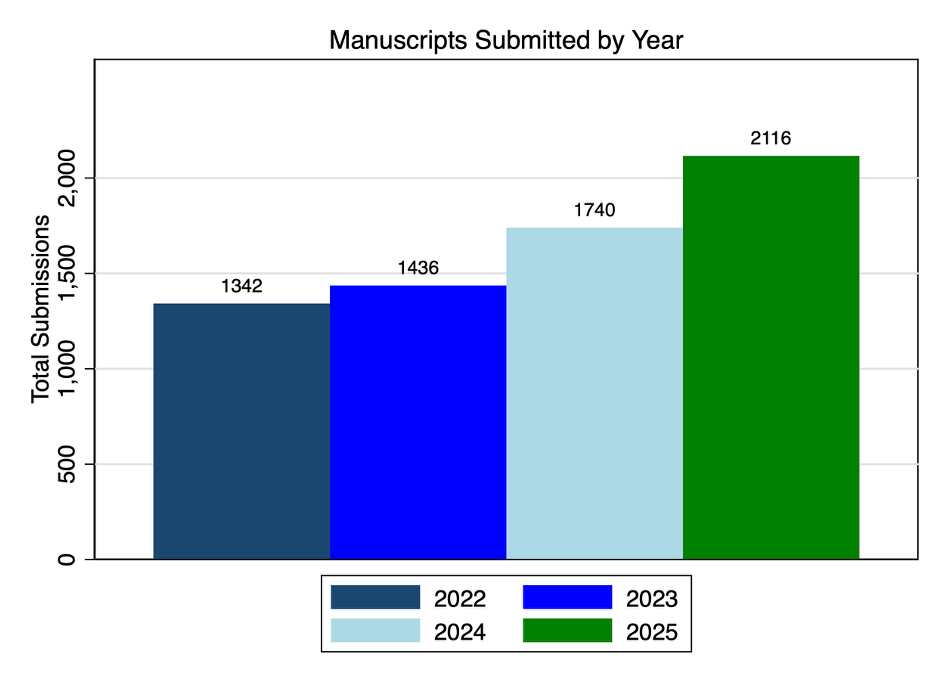
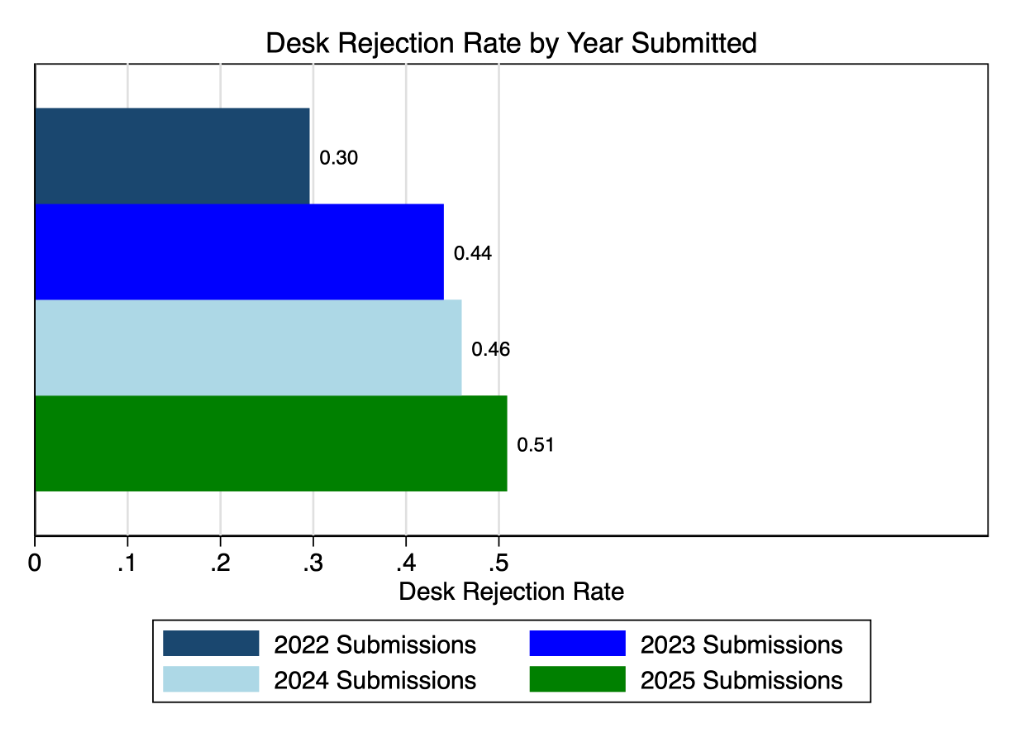
2025 was a year of consistency for the journal as we maintained the efficiency and quality of our operations and expanded on the scientific output—not in paper counts, but rather in topics and types. 2024 produced 100 publications as we closed the backlog of papers from pre-2023, so in 2025 there were less: 78 peer reviewed papers and our first Crossroads in years. Because submissions were way up (25%), this meant a lower acceptance rate, but we believe that most of the submission increases were from heavy-AI papers. I did not expect we would cross 2116 before my first term ended. Desk-rejects were up above 50% last year to partly to manage limited resources, but primarily because our retrospective analysis identified that we desk rejected nearly all the primarily AI-written papers we received. We have some accepted papers that aren’t quite out yet that I’m excited to share soon, including our first dataset paper and a famous field experiment on AI use in professional services firms. But first, here’s the tidal wave. . .
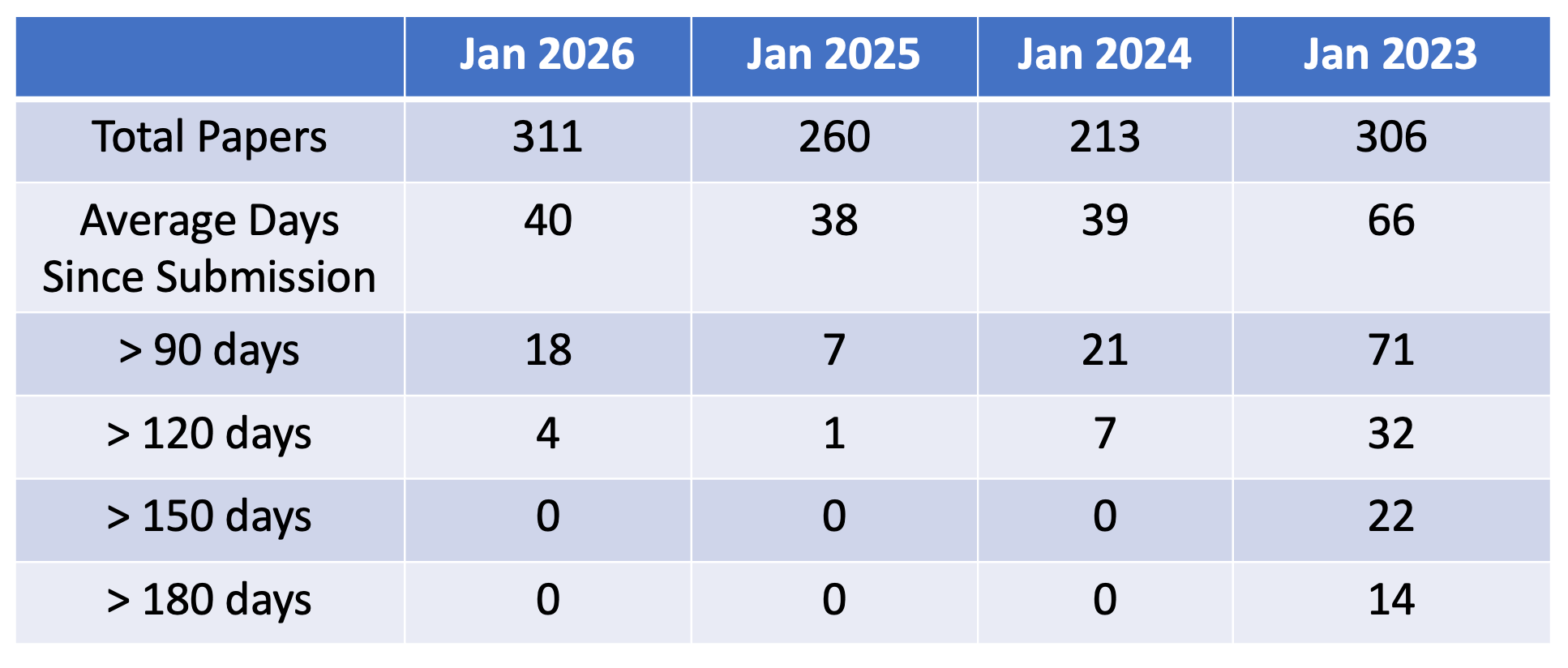
Despite the volume, we managed to keep inventory in check again and frankly, half the current papers over 120 days on the table below are my fault as I struggled with the 50-paper load I took on personally. But most everyone else is doing great.
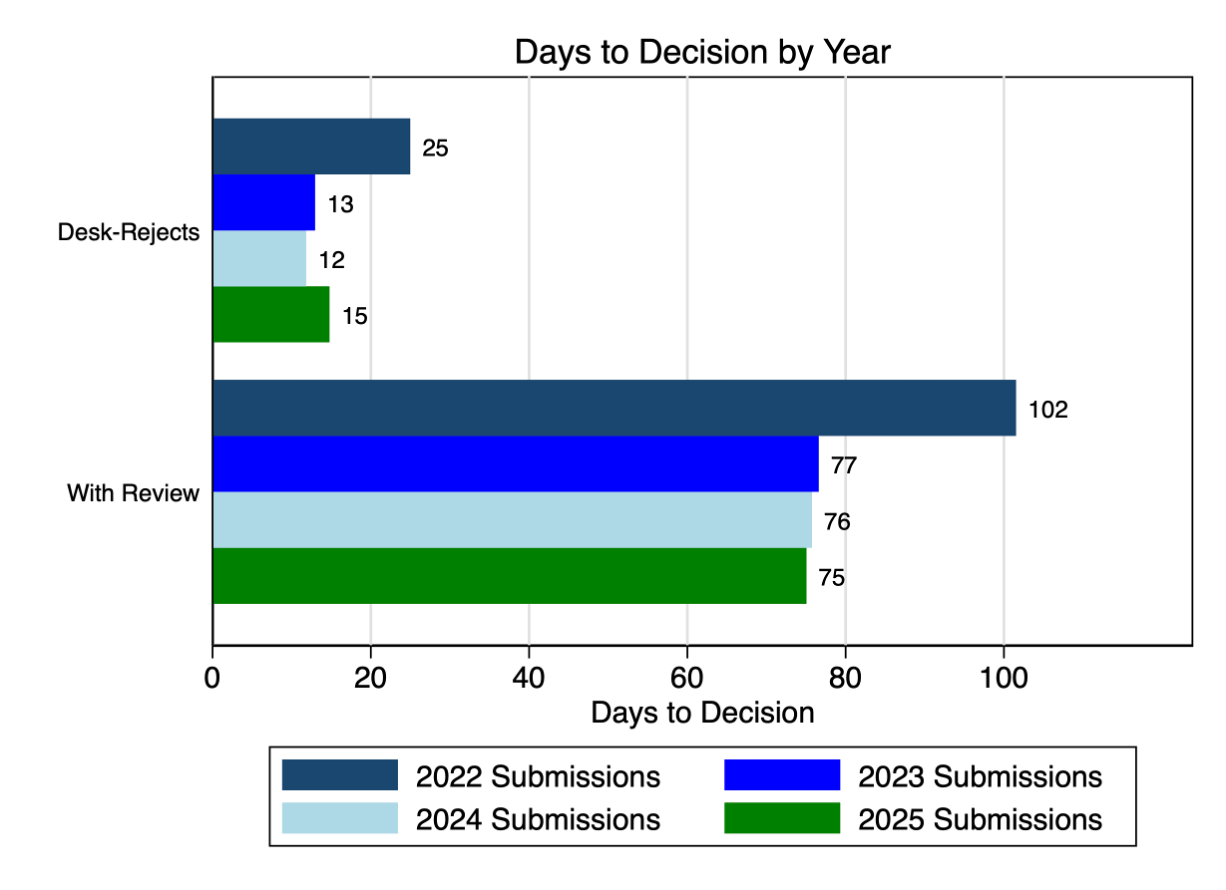
Averages of course hide the tails, but we’ve held remarkably steady the last three years. Desk rejects crept up a bit, but as Sharique notes, the humans (us) are tired and the White Walkers (AI papers) are relentless and growing in number.
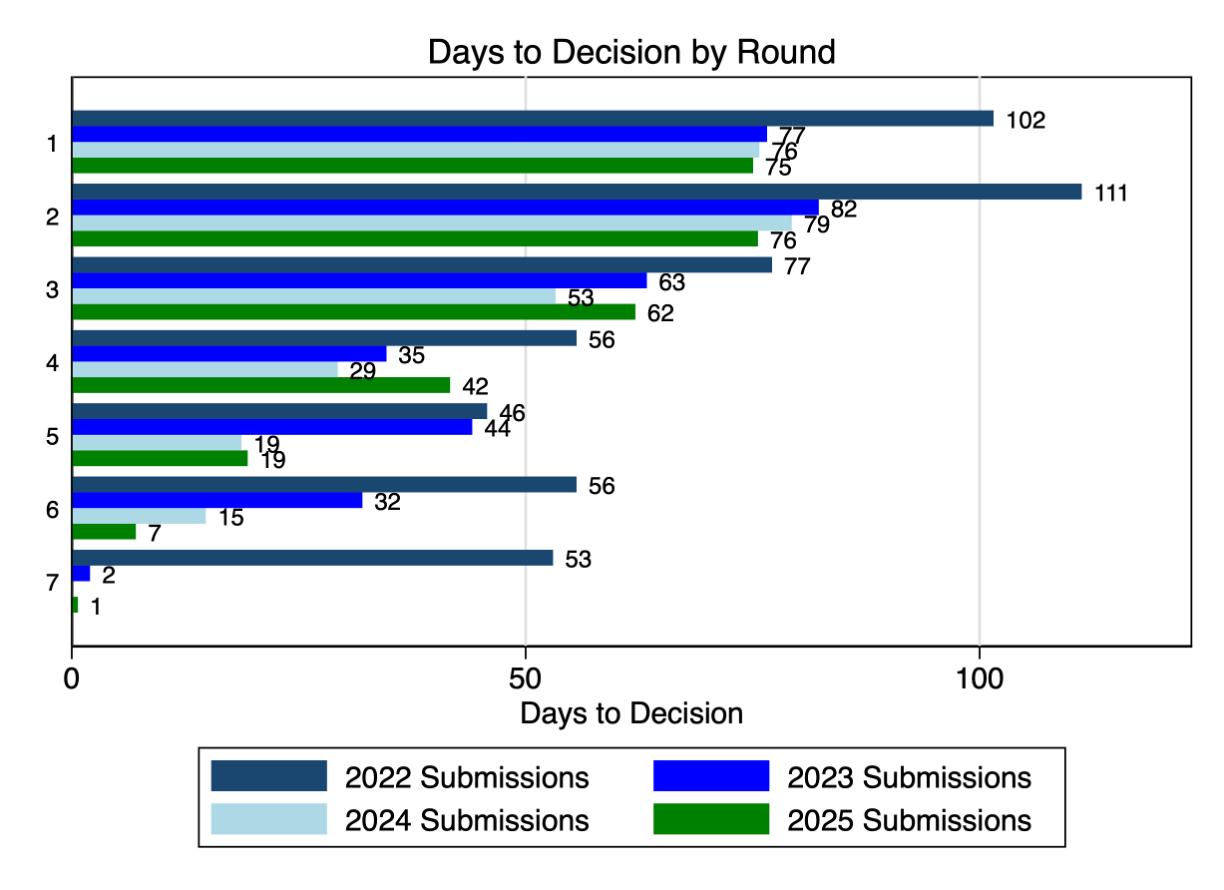
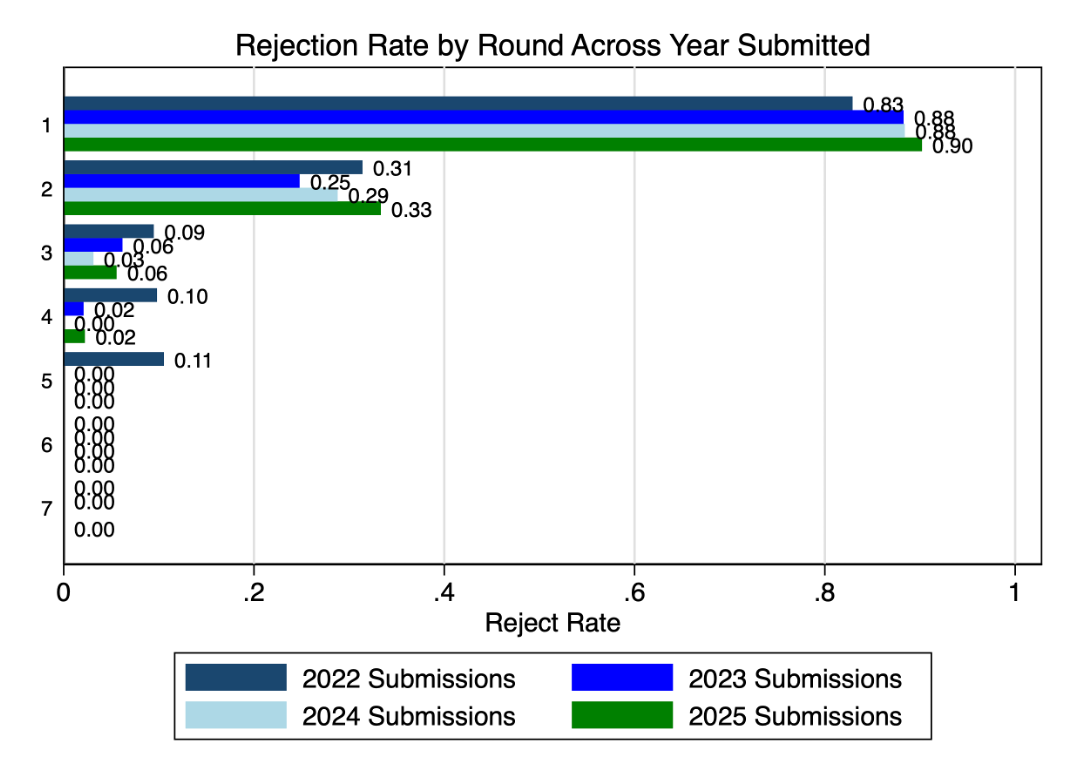
We like to provide transparency across rounds to give you a sense in later rounds. We’ve ticked up a bit there, but some of that is probably my fault too.
As I mentioned, the desk rejection rate is up, reflecting the AI-driven submissions we’re seeing more and more of. In case you’re curious, there is very little variation in DR rate across deputy editors. We’re all in the mid-40 to mid-50 range, despite having different mixes of papers. We were sad to lose Samina Karim this year, who was instrumental in both getting the journal through Covid and in making the EIC transition work. We’re fortunate to have such a deep talent pool, with Michelle Rogan and now Stefano Brusoni taking on this role.
Here’s our rejection rate across rounds. Our second round rejections are up this year, partly due to increased qualitative submissions (which naturally have more), but the key statistics are in Round 3 and later.
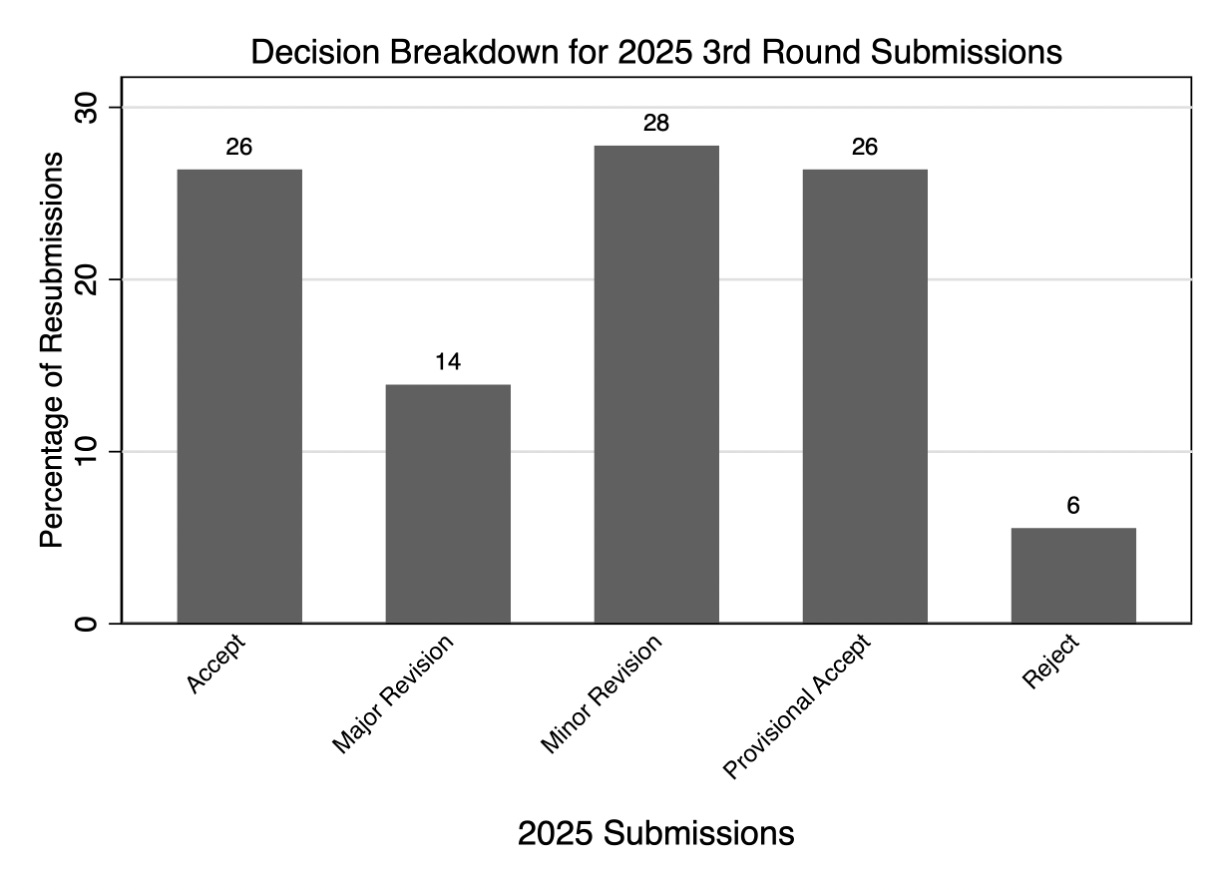
For full transparency, here are our third round decisions. Many of these didn’t go out for review:
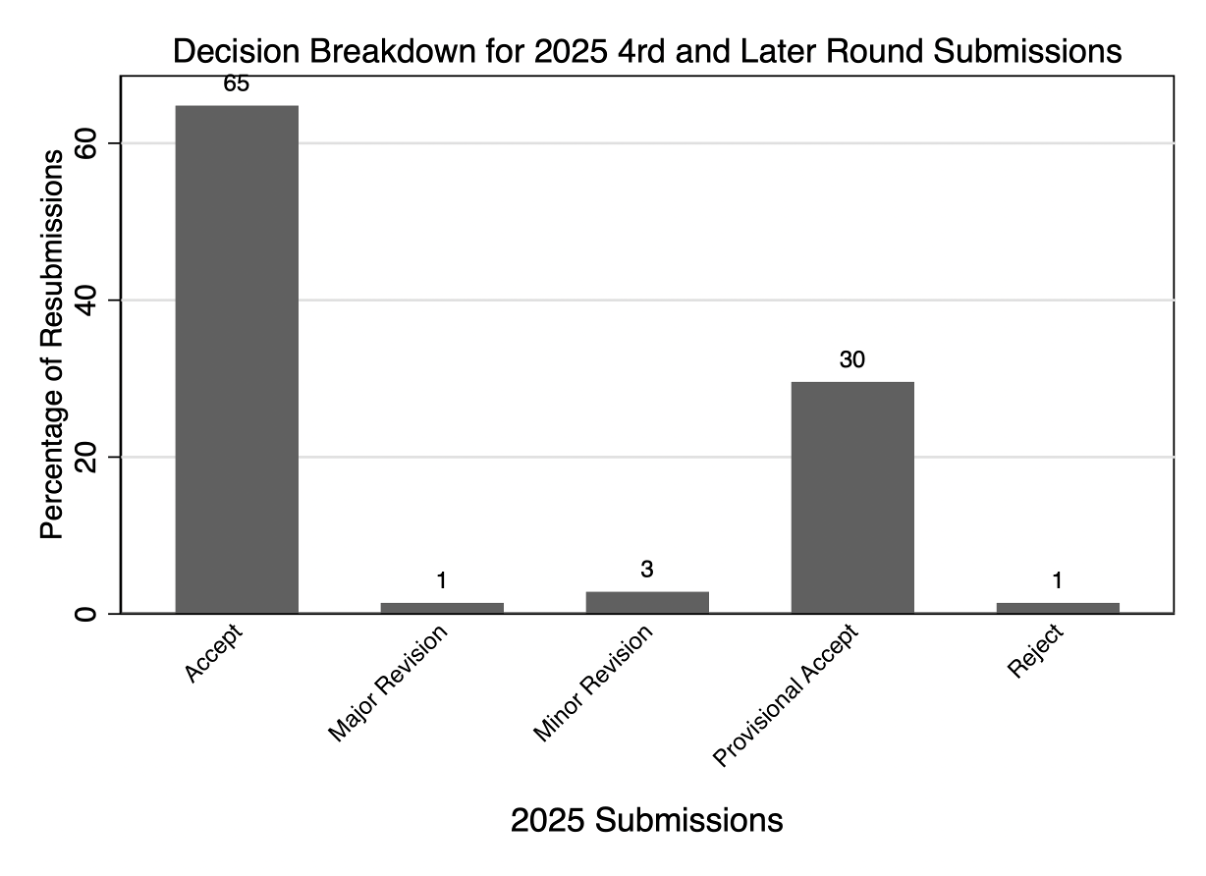
And here are our fourth rounders:
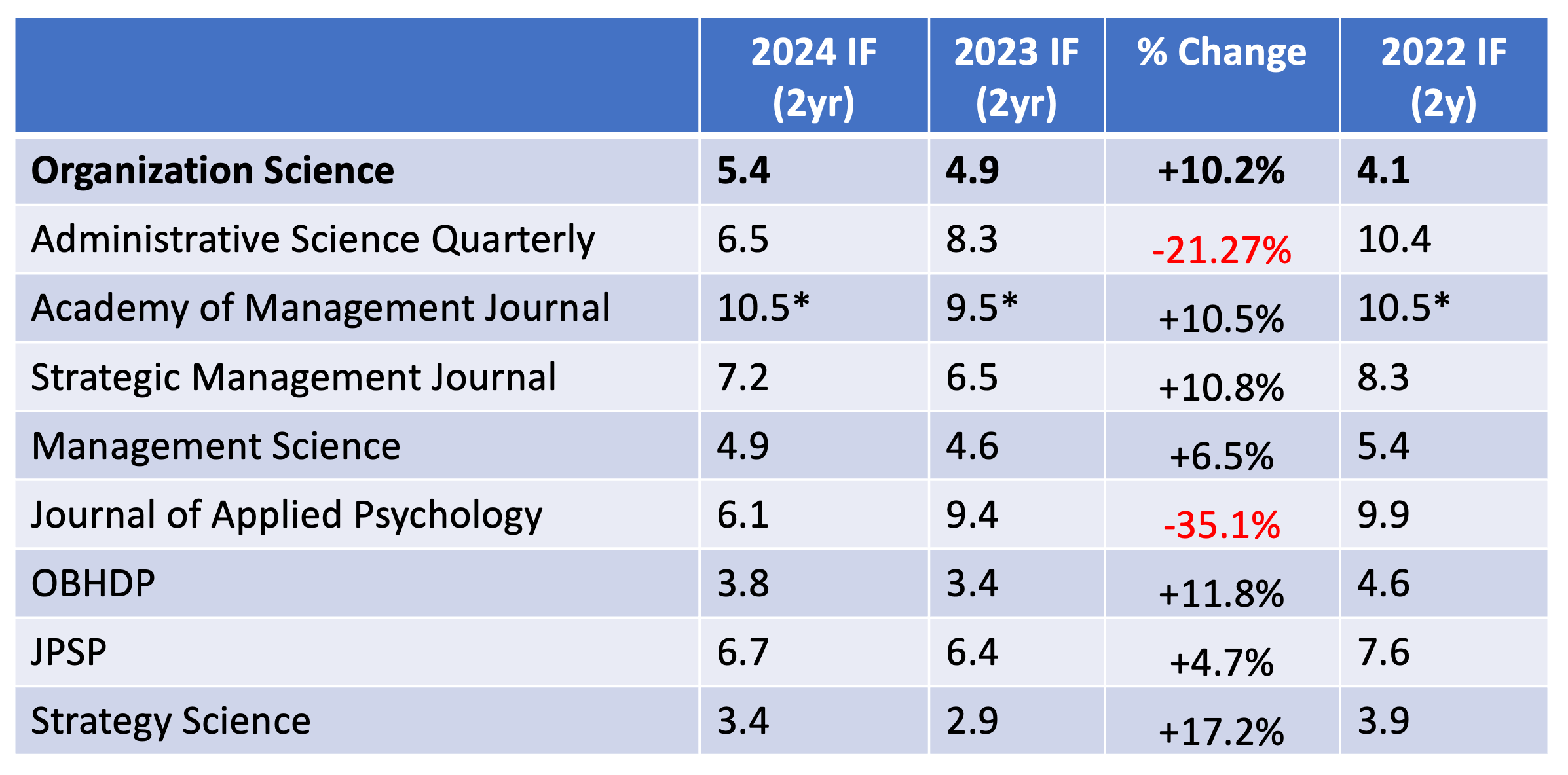
As I’ve reported below, our impact factor went up again. Take that for what it is. There are certainly some other journals not on the table below with much higher scores for various reasons that are completely uncorrelated (or negatively correlated) with our mission.2
That’s it for now. I’m off in search of dinner. I’m envious of those who have lived here in Paris, and feel for those of you who didn’t want to leave. I hope those here tomorrow or Monday travel safely and avoid running into El Presidentola.
Lamar
“Blasting” is a bit of an overstatement from the $80 speakers I’d saved up to install.
For the record, I’m not talking about journals that publish reviews. Reviews are very helpful, and I’m grateful that quality journals like JOM publish them.